


What Plasma Medicine Actually Treats (and Why Your Donation Is the Only Way to Make It)
A new global survey just confirmed what patients have known all along — plasma-derived medicine changes lives. Here's exactly what it treats, and how your donation fits in.
A new survey just put a number on something that's easy to lose track of between appointments: 69% of patients — or the people caring for them — said they noticed a real change in their health within a few months of starting a plasma-derived medicine.
That statistic comes from the Plasma Protein Therapeutics Association's Global Plasma Survey, released this month, which gathered responses from more than 1,100 patients, caregivers, family members, and healthcare providers around the world. It's easy to donate plasma regularly and still think of it mostly in terms of the paycheck. This post is about the other half of that transaction — the medicine your plasma actually becomes, and who it's for.
"Plasma Medicine" Is a Real Category, Not a Vague Idea
When people hear "plasma donation," they usually picture the chair, the needle, the hour or two, and the deposit that shows up after. What's easy to skip past is that plasma isn't a generic ingredient — it's the raw material for a specific, named class of prescription medicines, each one treating a specific condition.
No different from any drug you'd pick up at a pharmacy, except this one only exists because someone donated.
What Plasma-Derived Medicine Actually Treats
Here's the breakdown, in plain terms:
- Immunoglobulins (IG) — treat primary immunodeficiency, a group of conditions where the body can't produce enough antibodies to fight off infection on its own. For these patients, IG therapy isn't optional — it's what stands in for an immune system that doesn't fully work.
- Clotting factors — treat bleeding disorders like hemophilia, where blood doesn't clot the way it should. Without replacement clotting factor, something as routine as a minor injury can become dangerous.
- C1-esterase inhibitor — treats hereditary angioedema (HAE), a genetic condition that causes sudden, severe swelling attacks, sometimes in the throat, where they can become life-threatening.
- Alpha-1 proteinase inhibitor — treats alpha-1 antitrypsin deficiency, a genetic condition that can lead to progressive lung and liver damage without treatment.
Four categories, four very different patient populations — and every single one of them traces back to a donor chair.
Why None of This Can Be Made in a Lab
This is the detail that reframes everything: plasma-derived medicines cannot be manufactured synthetically. There's no shortcut, no lab workaround, no substitute ingredient. The entire supply of IG, clotting factors, C1-inhibitor, and alpha-1 proteinase inhibitor exists because people showed up and donated. Donors aren't contributing to the supply chain — for these medicines, donors are the supply chain.
What the New Survey Adds
Beyond the 69% statistic, the Global Plasma Survey found that plasma-derived medicine is a routine, trusted part of patients' lives, not a last resort:
- About 2 in 3 patients or caregivers surveyed receive plasma-derived medicine at least monthly — and of those, 41% receive treatment weekly.
- 87% of patients say they're confident in the safety and efficacy of plasma-derived medicines.
Put together: this isn't a niche or experimental treatment. It's medicine that a lot of people depend on regularly, and trust.
Back to the Chair
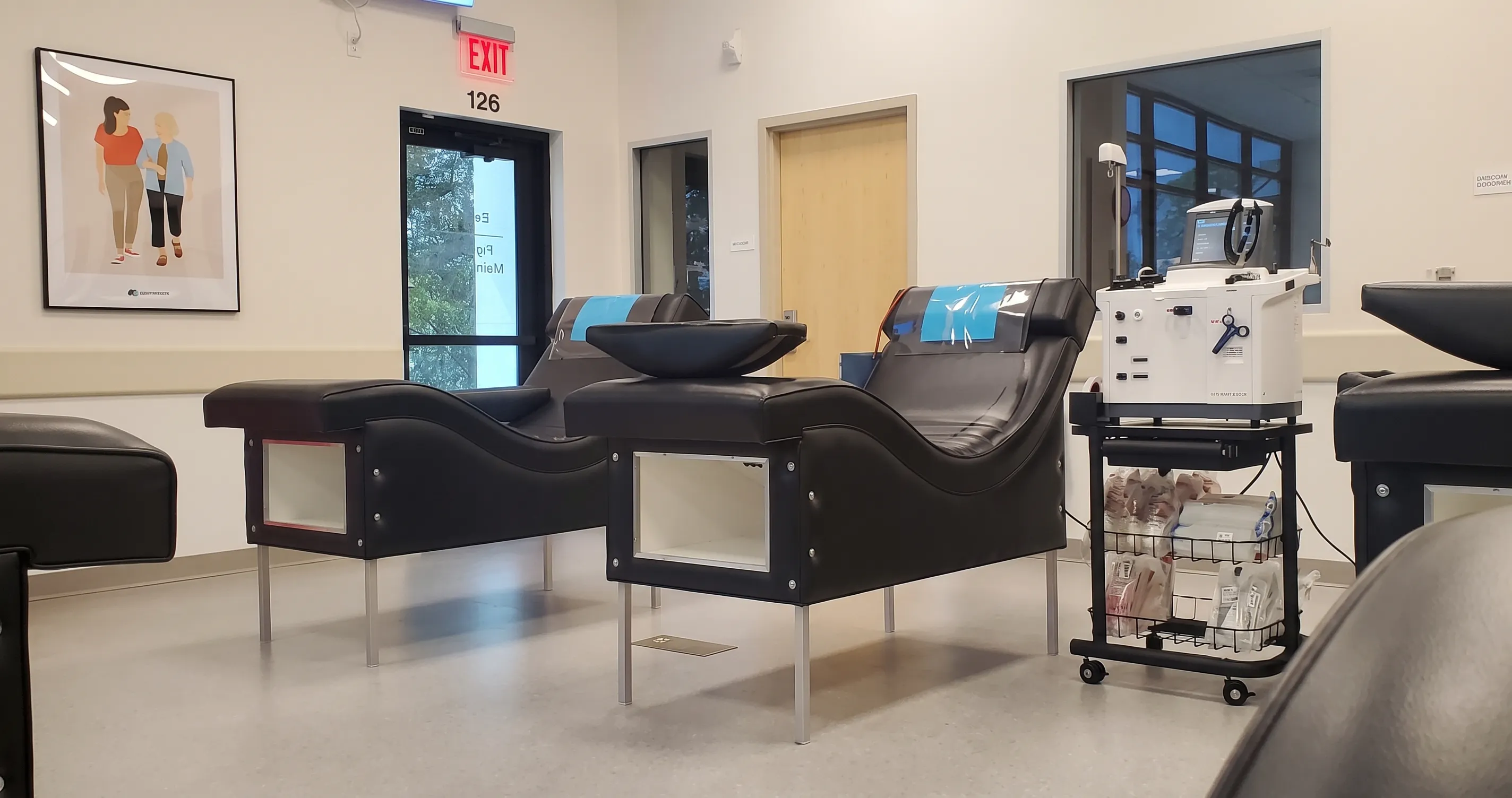
So the next time you're at a Parachute center, here's what's actually happening: your plasma is heading toward becoming one of four very specific medicines, for someone managing a condition where there is no other option. Not an abstraction — a named therapy, for a named condition, for a real patient who's probably due for their next dose around the same time you're due for your next appointment.
The compensation is real, and there's nothing wrong with that being part of why you show up. But it's worth knowing what the other side of it looks like too — because it's the only reason any of these medicines exist at all.
