


What Happens to Your Plasma After You Donate
You give it once. It does a lot more than most people realize.
Most donors know that plasma donation helps patients. But "helping patients" is a pretty abstract concept when you're sitting in a chair with a needle in your arm.
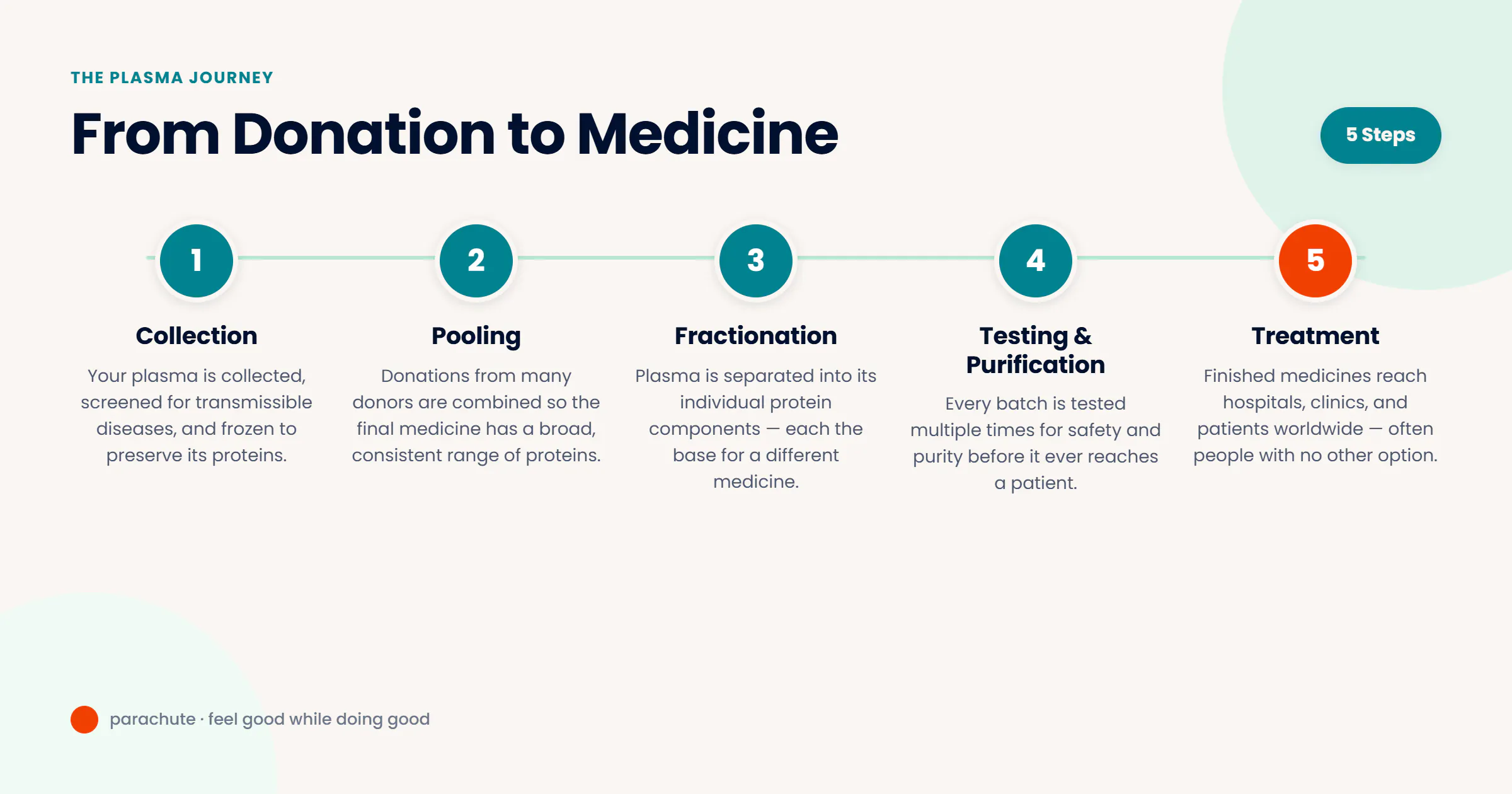
So here's what it actually means — what happens to your plasma after it leaves the building, and who it reaches on the other end.
First: What Is Plasma, Exactly?
Plasma is the liquid part of your blood — the pale yellow fluid that makes up about 55% of your total blood volume. It's mostly water, but it also carries proteins, antibodies, clotting factors, and enzymes that are essential for keeping people alive.
Those proteins are what pharmaceutical manufacturers are after. They can't be made synthetically in large enough quantities — they have to come from donors like you.
Who Receives It?
Plasma-derived medicines treat a wide range of conditions, including:
- Primary immunodeficiency (PI)— patients whose immune systems can't produce protective antibodies on their own
- Hemophilia A and B— bleeding disorders caused by missing clotting factors
- Alpha-1 antitrypsin deficiency— a condition affecting the lungs and liver
- Burn injuries and trauma— albumin, derived from plasma, is used in emergency care
- Neurological conditions— including Guillain-Barré syndrome and chronic inflammatory demyelinating polyneuropathy (CIDP)
Why There's Always a Need
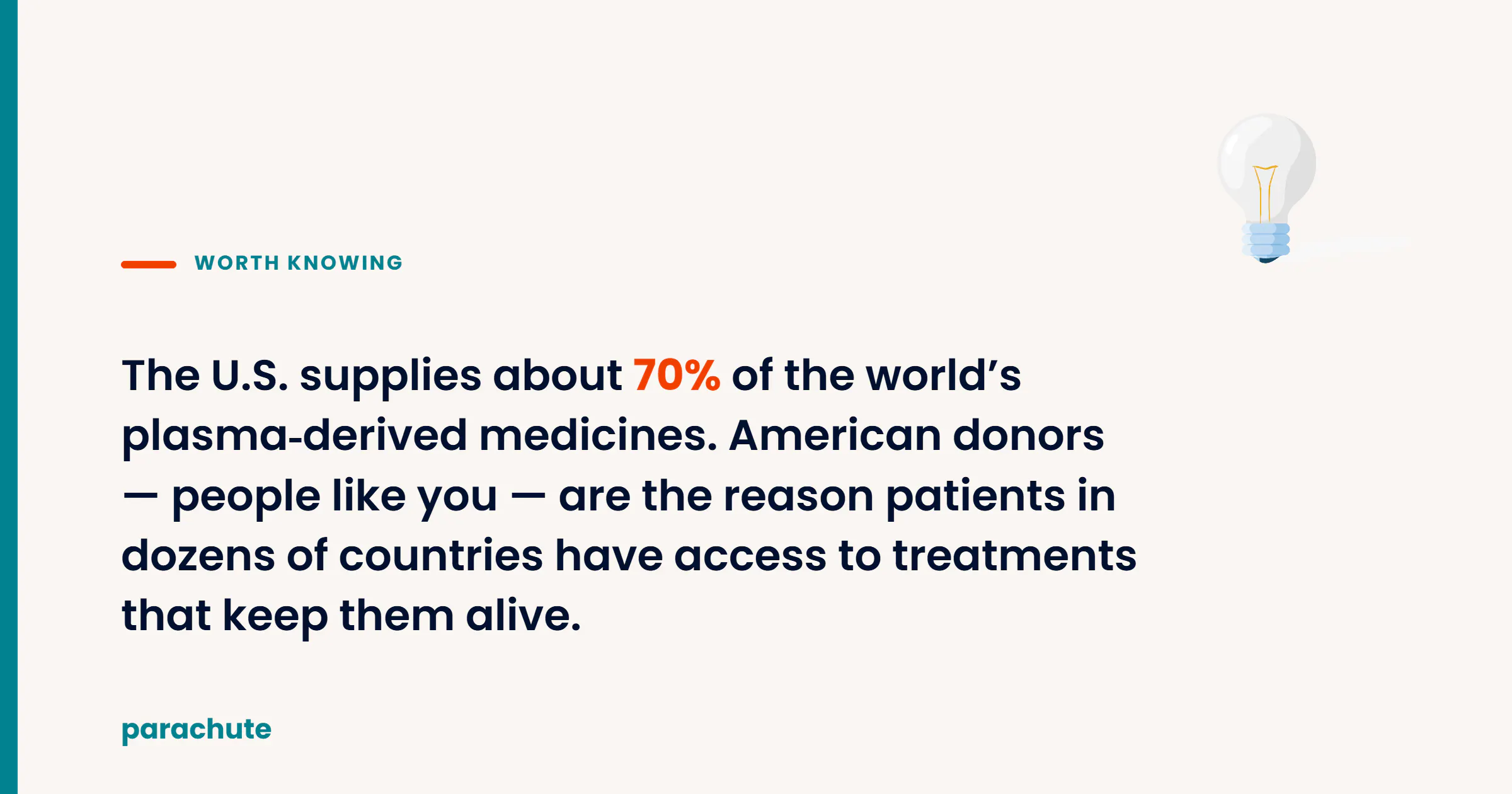
Unlike some medicines, plasma-derived therapies can't be manufactured from scratch. They require human plasma — consistently, in large volumes, from healthy donors. And as the number of patients diagnosed with conditions that require these treatments continues to grow, the gap between supply and demand stays real.
Donating twice a week might feel routine after a while. For someone on the other end, that routine is the difference.
Find A Center Near You
Check out our center locations to see if you could be eligible to donate plasma!
Book Now
Download our app today to get started
Have Questions?
Consult our FAQs
This article is for informational purposes only. It is not, nor is it intended to be, a substitute for professional medical advice, diagnosis, or treatment and should never be relied upon for specific medical advice.